
Why Repairs Define Whether Tenants Are Happy

Marks Out Of Tenancy has delved into 2,299 rental property reviews spanning from 2017 to 2025, uncovering how life as a tenant in the UK has transformed over time. From low-cost bedsits to luxury apartments, the data tracks rising and falling satisfaction scores, shifts in the way renters use review platforms, and the wide-reaching impact of major events like the COVID-19 pandemic. With trends broken down by region, season, and tenant demographics, the findings offer a unique, full-spectrum view of how the rental market - and renter expectations - have evolved.
The data revealed the importance of responsive and effective maintenance is a universal issue that cuts across all rental sectors. The research from Marks Out Of Tenancy reveals compelling evidence that maintenance quality significantly impacts tenant satisfaction, irrespective of property type or rent level.
Key Data Findings
Universal Maintenance Concerns: A staggering 86.9% of rental property reviews highlight maintenance issues. Clearly, maintenance quality is a primary concern for renters across all sectors, from budget accommodations to premium rentals.
Top Issues Identified: Kitchen problems (32.8%), mould (22.3%), and bathroom-related concerns (22.9%) dominate the list of grievances. These issues significantly affect tenants' quality of life and wellbeing.
Satisfaction Impact: Properties reporting maintenance issues score notably lower in tenant satisfaction (average 2.29) compared to those without reported issues (average 2.78), demonstrating that effective maintenance is critical to tenant happiness.
Seasonal Patterns in Maintenance Reporting
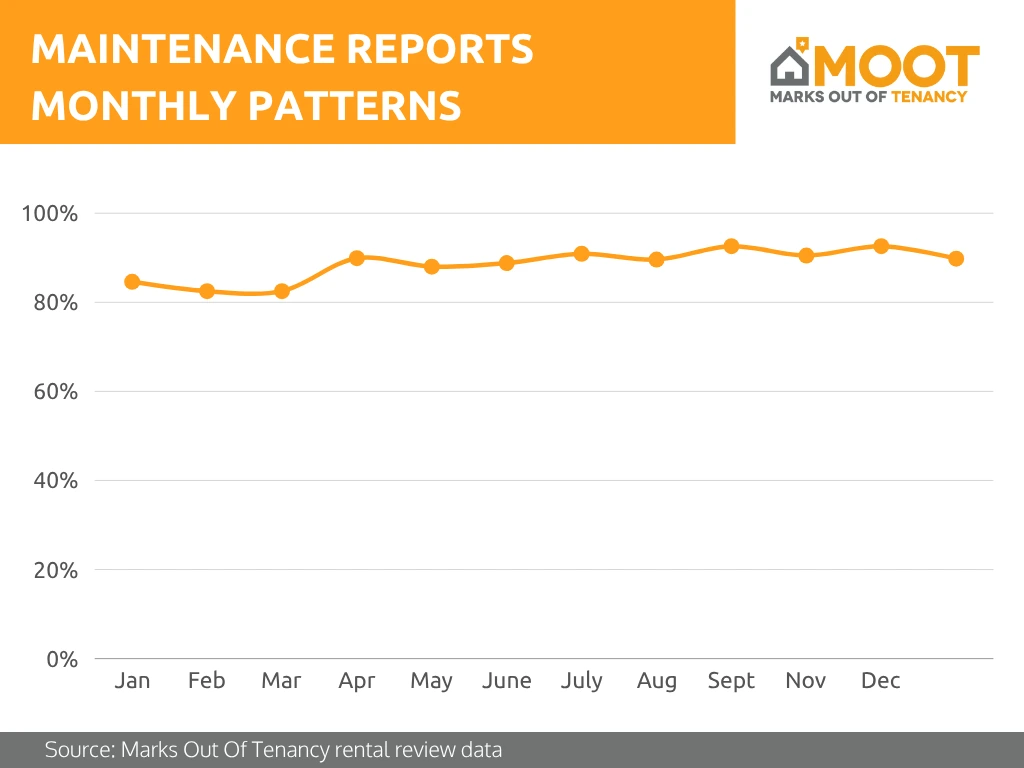
There are clear seasonal variations in maintenance reporting patterns. The highest volume of reports typically occurs between September and November. This surge is likely driven by the start of new academic terms and tenancy agreements, during which incoming tenants often identify existing issues. Additionally, the transition into colder, wetter weather can exacerbate problems such as heating malfunctions and damp, prompting more reports.
In contrast, reporting tends to dip slightly during the later winter months, particularly in February and March. This may be due to fewer tenancy changes and a general slowdown in reporting non-urgent issues during colder periods. Understanding these seasonal trends can help with forecasting and resourcing for maintenance response teams.
Implications for Renters
For tenants, these findings underscore the importance of carefully reviewing maintenance responsiveness when considering rental properties. Awareness of common issues such as mould and kitchen repairs can guide tenants to make informed decisions and proactively discuss maintenance expectations with potential landlords or letting agents.
For a detailed look at landlord repair responsibilities, take a look at our renters’ guide on who is responsible for making repairs in rented properties.
Recommendations for Landlords and Letting Agents:
Proactive Management:
Landlords and letting agents are encouraged to adopt a proactive approach to property maintenance, particularly in anticipation of peak reporting periods such as autumn. Conducting seasonal inspections and resolving recurring issues before tenants report them can reduce complaint volumes and prevent small problems from escalating into larger, costlier repairs.
Transparent Communication:
Maintaining open and consistent communication with tenants about planned maintenance, timelines, and progress builds trust and reduces frustration. Regular updates—especially during high-demand periods—can enhance the tenant experience and contribute to higher retention rates, as tenants feel heard and respected.
Investment in Quality Maintenance:
Ongoing investment in reliable maintenance services is not only crucial for tenant wellbeing but also for protecting and enhancing property value. Swift action on frequently reported issues, such as kitchen appliances, ventilation to prevent mould, and functional, hygienic bathrooms, sends a strong message that tenant comfort is a priority. This can lead to better reviews, fewer void periods, and longer tenancies.
Insights for Researchers and Industry Analysts
These findings highlight clear trends worthy of deeper investigation, particularly the impact of seasonal patterns and the correlation between specific maintenance issues and tenant retention. Further research could explore innovative maintenance solutions or the effectiveness of preventative measures.
Effective maintenance is not merely about fixing issues; it's about enhancing quality of life, fostering positive landlord-tenant relationships, and securing long-term property investments. This research from Marks Out Of Tenancy reinforces the critical role that timely and effective maintenance plays in shaping the future of renting.
The rest of the series
This is one of six analyses drawn from the same set of tenant reviews.
- The overview of the whole series
- What drives tenant satisfaction
- How renting differs by region
- Landlords or letting agents: who does better
- Deposit protection trends
For how renters said they were feeling quarter by quarter, rather than what they wrote in reviews, see the Renters' Pulse survey.
And if any of this describes your own tenancy, review your landlord, agent, property and neighbourhood. The data on this page is only what other renters took the time to write down.
The practical side of this: when a landlord will not repair.