
OccupID: Occupancy Data For Housing Enforcement
In an era where housing pressures, safety concerns, and revenue losses challenge local authorities and housing providers across the UK, OccupID offers a cutting-edge solution, delivering GDPR-compliant, anonymised occupancy data to transform how properties are monitored, regulated, and managed.
What Is OccupID?
At its core, OccupID is a data platform designed to provide anonymous occupancy intelligence across the UK property landscape. It enables stakeholders - ranging from local councils to mortgage lenders - to understand how properties are being used without compromising tenant privacy.
Key Benefits & Use Cases
1. Combating Unlicensed HMOs and Overcrowding
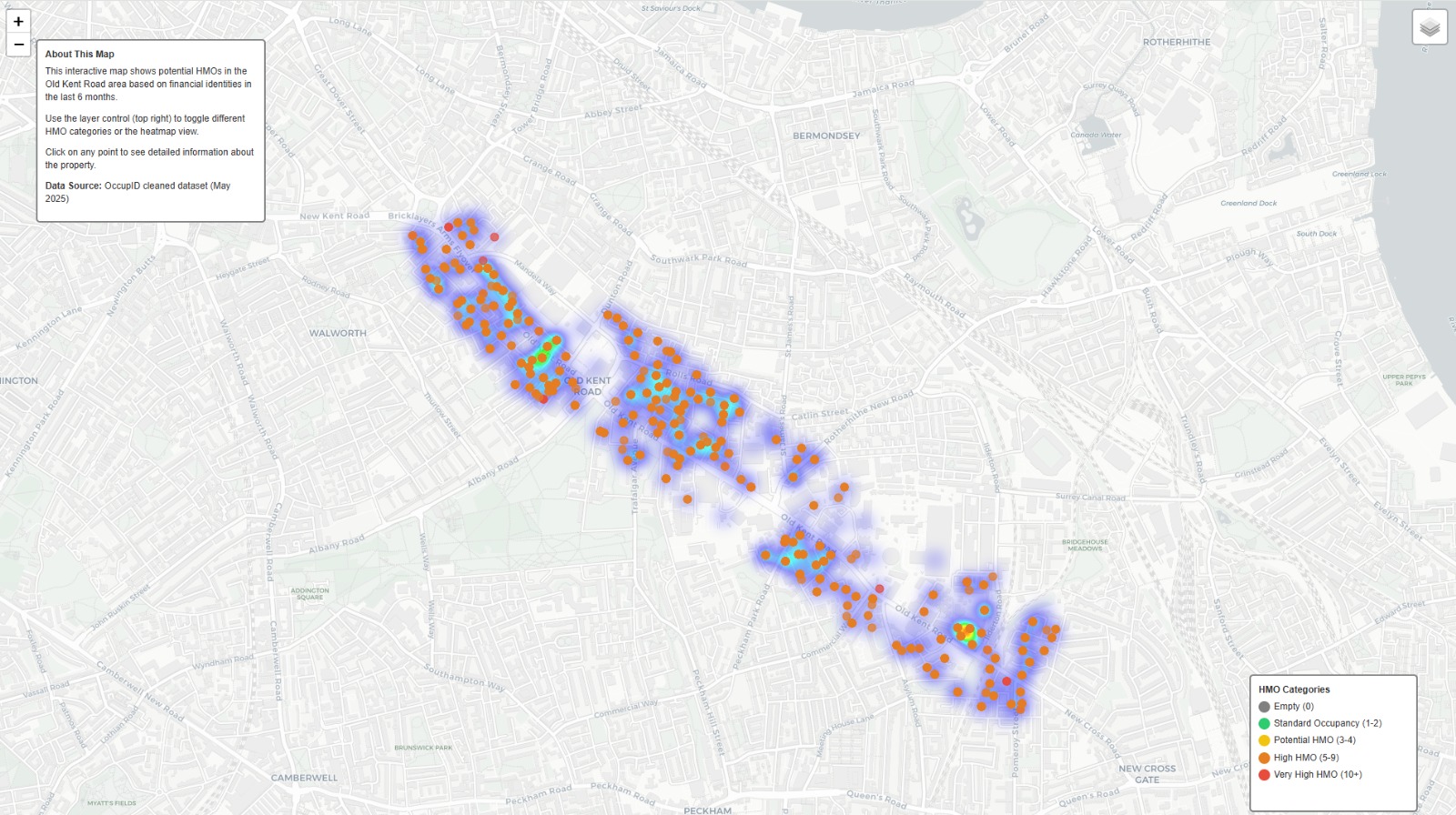
OccupID identifies properties where tenant numbers significantly exceed official limits, flagging potential HMOs operating illegally. These insights allow local authorities to prioritise enforcement rather than relying on inefficient blanket monitoring.
2. Detecting Empty or Abandoned Properties
By spotting homes with no occupancy activity over time, OccupID helps councils target vacant properties before they become dilapidated or attract vandalism - helping curb urban decay.
3. Council Tax Single-Person Discount Fraud Prevention
When multiple adults claim a single-person discount, councils lose significant revenue. OccupID helps pinpoint such discrepancies for targeted investigation, enabling fair policy enforcement without overextending resources.
4. Supporting Mortgage Lenders in Risk Management
Lenders can verify whether properties with active loans are occupied as declared, helping detect subletting, misuse, or outright mortgage fraud. This protects portfolio integrity and investment security.
5. Privacy-First Design
OccupID operates without collecting personally identifiable information - no names, contact details, or identity data. This privacy-first approach includes regular independent audits and strict GDPR compliance.
Real-World Impact & Visibility
Featured on BBC One London
On 2nd August 2025, BBC One London aired “Rooms Under the Radar”, a hard-hitting segment illuminating the prevalence of unlicensed HMOs. OccupID data, supplied by its developer Marks Out Of Tenancy, played a pivotal role in identifying property clusters in boroughs like Newham, Southwark, and Tower Hamlets where dangerous over-occupancies were going unregulated.
Local authorities leveraged this data to uncover widespread, unsafe housing conditions - particularly affecting vulnerable renters such as students, migrants, and low-income households.
Read more about how OccupID helped the BBC uncover unlicensed HMOs.
Proven Enforcement Results
Many local authority housing enforcement teams have used our OccupID data to tackle their housing issues.
"OccupID has transformed our approach to HMO enforcement, allowing us to be proactive rather than reactive. We've identified 28% more unlicensed HMOs in just three months."
"With over 200,000 long-term empty homes across the UK, OccupID has helped us bring properties back into use - homes that would otherwise remain vacant."
"OccupID's early warning system has allowed us to prevent 32 potential homelessness cases this quarter. The ability to identify vulnerable tenancies before crisis point is transforming our prevention work."
Why OccupID Matters
Data Over Reactions: Rather than relying on community complaints or random audits, OccupID enables targeted, data-informed action - transforming how authorities allocate resources.
Fairness First: OccupID supports equitable investigations, enabling authorities to act where truly necessary and leaving genuine single-person households undisturbed.
Public Safety Boost: Overcrowding increases fire risks, accelerates property wear, and can even suggest modern slavery. Identifying and intervening early protects residents and neighbourhood welfare.
Revenue Recovery Without Raising Taxes: By identifying discount fraud, local governments can recover lost council tax revenue without increasing the tax rate.
Ready to transform how you manage housing risk and safety?
Book a demo today and discover how data-driven, anonymous occupancy intelligence can improve enforcement, protect residents, recover revenue, and enhance community wellbeing - all with smarter, safer action.

Where to go next
What the data finds, and the case that shows it working.
- OccupID for local authorities, what the service does and what it is worth
- A £58,000 prosecution built on this data, Uttlesford District Council, 2025
- Finding unlicensed HMOs
- Finding empty homes
- Single person council tax discount fraud
- Finding overcrowded properties
If you run an enforcement or revenues team and want to see what we already hold for your area, that takes one conversation. Get in touch.