
Flatmate Been In Your Room? How To Handle It
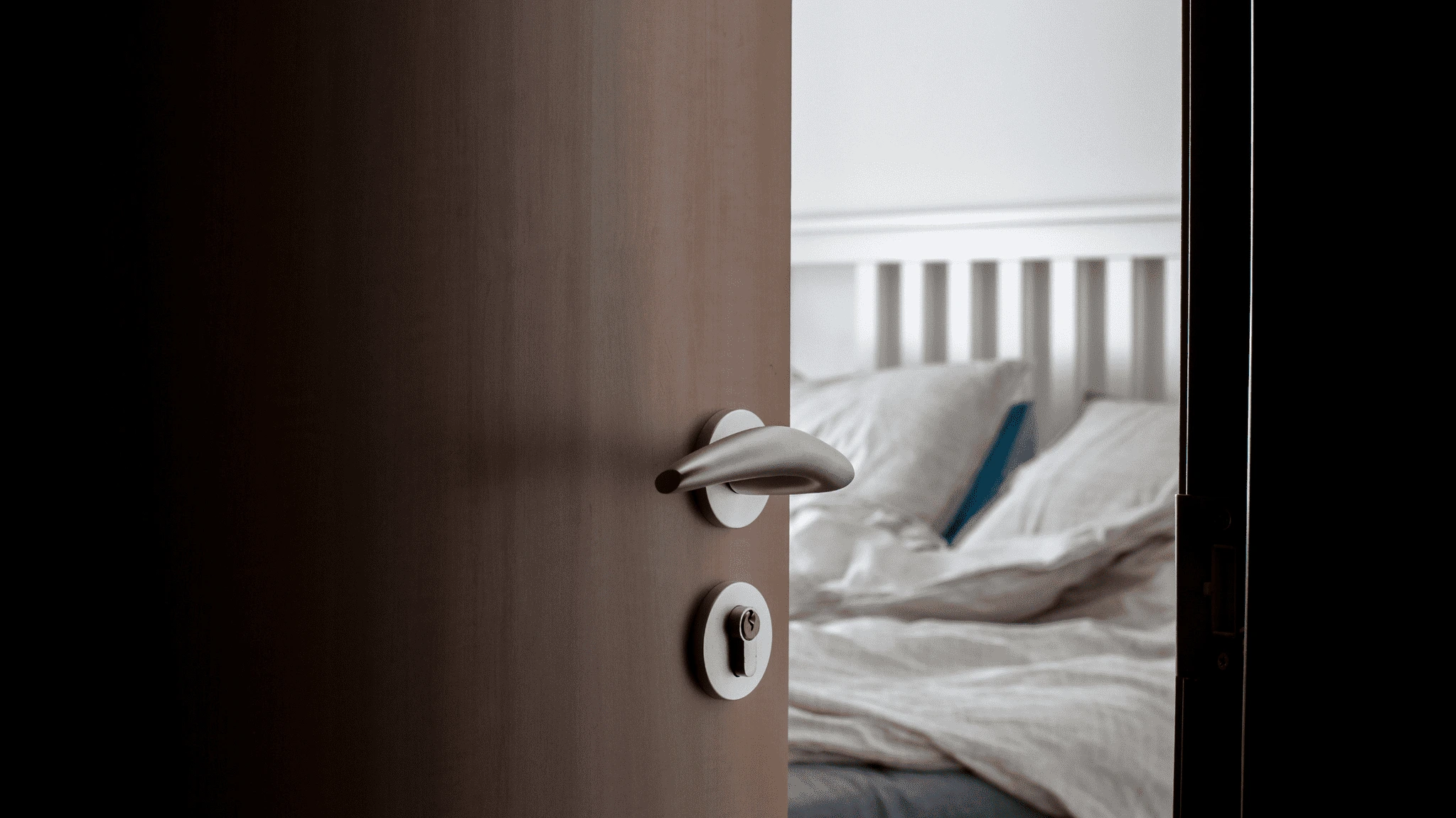
Something in your room has moved. A drawer isn't quite shut, your laptop is at a slightly different angle, or a housemate mentions something they could only know from your post.
It's a horrible feeling, partly because you're never quite certain, and partly because you still have to live with them afterwards.
The short version
- Be sure before you accuse. A wrong accusation in a shared house is very hard to undo.
- Raise it directly and early, in person, once.
- If things are being taken, that's different and deserves a different response.
- A lock on your door is usually reasonable to ask for, but it needs your landlord's agreement and has to allow escape without a key.
First, are you sure?
Worth sitting with, because the alternative is a permanent atmosphere over a misremembered drawer.
Ask yourself whether anyone else has been in legitimately. A landlord or contractor with notice. A cleaner, if one comes. Someone retrieving something they'd lent you. Whether you moved it yourself while tired.
If you're genuinely unsure, you can find out without confronting anyone.
- Note what's where. A photograph of a drawer or desk takes two seconds and settles it next time.
- Position things deliberately. A paper aligned to an edge, an object at a specific angle.
- Keep a dated note of each occasion. Two or three entries turns a feeling into something specific you can raise.
Don't put a camera in a shared area, and think very carefully before recording anywhere someone would expect privacy. That gets legally complicated fast and it can end up being your problem rather than theirs.
Having the conversation
Do it face to face, privately, and once. Not in the group chat, not by note.
Lead with the specific thing rather than the accusation. "Has anyone been in my room? My desk drawer was open and I'm fairly sure I shut it" gives them room to explain, and an innocent person will usually have an explanation immediately.
If it's someone with a reason to have gone in, a leak, a smoke alarm, a delivery, you'll find out in about four seconds and the whole thing is over.
If you get evasion, that tells you something too. So does an overreaction.
Say what you want to happen: "I'd rather nobody went into my room without asking." Simple, unarguable, and it's a boundary rather than an allegation.
If it keeps happening
Be direct the second time. "This has come up before and it's still happening. It needs to stop." No hedging and no apologising for raising it.
Then take practical steps rather than relying on goodwill:
- Ask your landlord about a lock. See below.
- Move anything sensitive. Documents, passport, spare cards, medication. A small lockable box costs very little.
- Secure your devices. Screen lock on, auto-lock short, and check for anything unexpected installed. Change passwords if you have any doubt.
- Redirect your post if that's part of it.
Getting a lock fitted
Usually reasonable to ask for, and often already present in a house let room by room.
Two things to get right:
Ask your landlord first, in writing. Fitting a lock is an alteration to the door, so it needs permission, and doing it without asking can come out of your deposit. Framed as a security request, most landlords agree, and many will pay for it. Offer to cover the cost and to remove it and make good at the end if that helps get a yes.
It must not compromise fire escape. A lock you need a key to open from the inside is a serious fire risk and is not acceptable in a shared house. A thumb-turn, a bolt, or a lock that always opens from inside without a key is the right kind.
Your landlord retains the right to enter with 24 hours' written notice, so they'll want a key or access. That's normal and not a reason to refuse. Landlords entering without permission covers where the limits are.
If it's not just snooping
There's a line between someone being nosy and someone taking things, and it matters.
If money, cards, jewellery or anything of value is going missing, that's theft, and it's reasonable to treat it that way. Report it to the police and get a crime reference number. That's not an overreaction and it isn't disproportionate: you also need the reference for any insurance claim.
Tell the others in the house, factually. If you're on individual tenancies in an HMO, tell the landlord too, because there's usually a clause about not causing nuisance to other occupiers and they chose your housemates.
Check whether your contents insurance covers theft by someone lawfully in the property, because many policies exclude it. Worth knowing before you need it.
Related: when food keeps disappearing, which is a much smaller version of the same trust problem.
If it's your landlord
Different situation with different rules.
Your landlord must give at least 24 hours' written notice before entering and come at a reasonable time. Letting themselves in without that is trespass, and doing it repeatedly can amount to harassment, which is a criminal offence under the Protection from Eviction Act 1977.
Put your objection in writing, keep a log of dates and times, and contact your council's tenancy relations team if it continues. Landlord harassment sets out what to do.
If living there has become unbearable
Sometimes trust doesn't come back, and that's a legitimate reason to leave rather than something to endure.
Since May 2026 every tenancy is periodic, so you can give two months' notice at any point without a fixed term to serve out.
The catch in a shared house: on a joint tenancy your notice ends the tenancy for everybody, not just you. On individual tenancies it affects only you. Know which you're on before you serve anything. Shared house rights explains the difference, and moving now fixed terms have gone covers giving notice.
The honest summary
Be certain, raise it once and directly, and ask for a lock if it doesn't stop. Move anything sensitive rather than relying on trust that's already been dented.
If things are being taken rather than looked at, treat it as theft and report it. And if it's the landlord rather than a housemate, that's a different and more serious matter with proper routes.
Whatever happens, review the property and landlord when you leave. Whether a house share has locks on the doors, and whether a landlord respects notice, is exactly what the next person cannot find out any other way.
This guide covers England and reflects the position at August 2026. Wales, Scotland and Northern Ireland differ. General information rather than legal advice, and your own tenancy agreement governs alterations such as fitting a lock. Sources: Shelter, landlord access, Protection from Eviction Act 1977.