
Served With An Eviction Notice? How To Check It's Valid
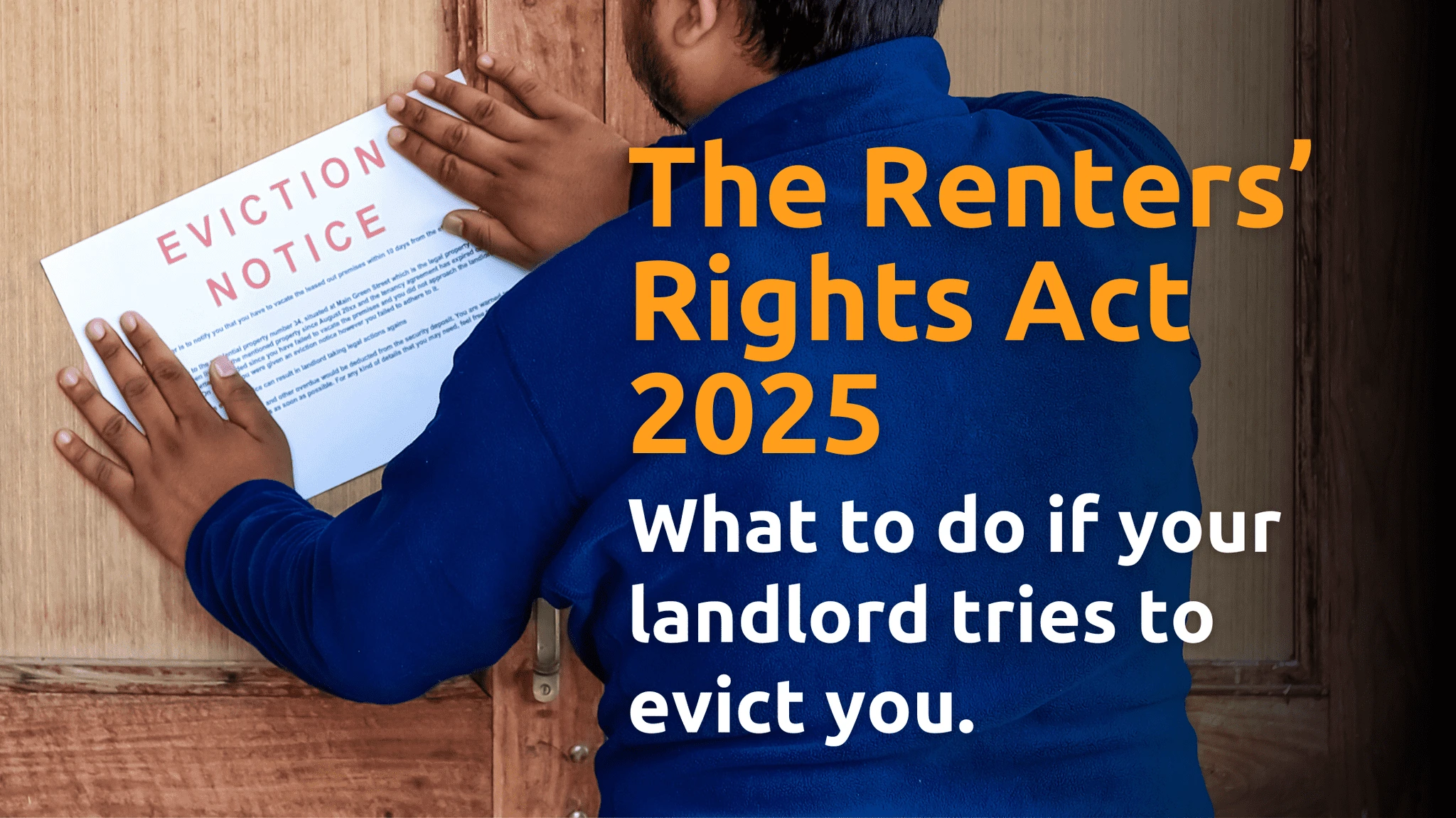
A notice has arrived, or your landlord has told you to be out by the end of the month. It's frightening, and the first thing to know is that a letter is not an eviction.
Since 1 May 2026 the rules changed substantially in your favour. Here's how to tell whether what you've been given is valid, and what to do either way.
The short version
- Only a court can evict you. Not a letter, not a text, not a landlord at the door. And only a county court bailiff can remove you.
- Section 21 no longer exists. Any notice relying on it is invalid, whatever date is on it.
- Every ground has a minimum notice period, and several can't be used at all in your first twelve months.
- Don't leave because you were told to. Get it checked first, free.
What can't happen
Under the Protection from Eviction Act 1977 it is a criminal offence to evict someone without a court order, or to harass them into leaving.
That means your landlord cannot lawfully:
- Change the locks
- Remove your belongings, or doors and windows
- Cut off gas, electricity or water
- Threaten or intimidate you into going
- Let themselves in repeatedly to make life uncomfortable
- Physically remove you, or send anyone to
None of that becomes lawful because you owe rent or because notice has expired. If it's happening, that's an emergency: call the police and say "illegal eviction", and contact your council's tenancy relations or housing options team, who can often intervene the same day. Compensation for illegal eviction is frequently substantial. Landlord harassment covers it.
Checking whether a notice is valid
Work through these in order.
1. Does it rely on Section 21?
If it says Section 21, or "no fault", or gives no reason at all, it isn't valid. That route was abolished on 1 May 2026. GOV.UK is explicit: you can no longer be evicted using it "even if your tenancy agreement says you can."
2. Which ground does it state?
A valid notice must specify the ground and give the required period.
- Ground 1A, selling. Four months, and it can't end a tenancy in its first twelve months.
- Ground 1, landlord or family moving in. Four months, same twelve month protection.
- Ground 8, serious rent arrears. Four weeks, and it needs at least three months of arrears, both when notice is served and at the hearing.
- Grounds 10 and 11, other arrears or persistent lateness. Four weeks, and discretionary.
- Ground 14, antisocial behaviour. Discretionary, and the court can't make an order until 14 days after notice.
3. Do the dates work?
Count the notice period properly from the date you received it. Short notice is invalid notice.
4. Has your landlord done their bit?
This is where many claims fail. Check whether they:
- Protected your deposit in a scheme and gave you the prescribed information
- Gave you a valid gas safety certificate
- Gave you an EPC
- Gave you the written information about your tenancy's key terms, or the How to Rent guide if the tenancy predates 1 May 2026
- Have the required HMO licence, if the property needs one
Failures here can defeat a possession claim regardless of the ground.
Mandatory does not mean automatic
Some grounds are mandatory, meaning the court must grant possession if the ground is proven and there's no defence. Grounds 1, 1A and 8 are among them.
But proven is doing a lot of work in that sentence. The landlord still has to serve a valid notice, follow the process, and satisfy a judge. And with Ground 8 specifically, the arrears must exist on the day of the hearing as well as when notice was served. Clearing them before the hearing defeats the mandatory ground entirely, which has saved a great many tenancies.
Discretionary grounds go further: even if proven, the judge decides whether eviction is reasonable in all the circumstances, including your conduct, the landlord's, and the effect on your household.
What to do, in order
- Don't leave yet. Leaving voluntarily can affect whether the council treats you as homeless through no fault of your own.
- Keep the notice and the envelope. The date matters.
- Get free advice now. Shelter, Citizens Advice, or your council's housing options team. All free, and all used to reading these.
- Keep paying the rent. Whatever else is happening. Arrears create a ground that didn't previously exist.
- Gather your documents. Tenancy agreement, deposit certificate, gas safety certificate, repair correspondence.
- Reply in writing if you think the notice is invalid, saying why. Keep it factual.
- Tell the council early if you may become homeless. They have duties that start before you actually lose the home, and leaving it late reduces your options.
If it goes to court
You'll get papers with a hearing date and a form to respond to. Respond to it. Not responding is the single most common way tenants lose cases they could have defended.
Get representation. Many county courts have a free duty solicitor scheme on possession days, and you can use it on the day, though advice beforehand is better.
Possible defences include an invalid notice, deposit or licensing failures, disrepair counterclaims, discrimination, and on discretionary grounds simply that eviction isn't reasonable.
Even if an order is made, you usually get time, and only a county court bailiff or High Court enforcement officer can carry it out. A landlord turning up with a van is not enforcement.
Retaliation, and why it's harder now
The old pattern was straightforward: complain about repairs, receive a Section 21. It worked because no reason was needed, and it kept a lot of people quiet in poor housing.
That route is closed. A landlord now needs a ground and has to prove it, and "the tenant complained" is not one.
If a notice arrives suspiciously soon after you reported disrepair or contacted environmental health, say so in your response and to whoever advises you. The timing is relevant, and it's the sort of thing a judge notices on a discretionary ground.
The honest summary
A notice is the start of a process, not the end of your tenancy. Check the ground, check the dates, check whether the landlord met their own obligations, and get free advice before you do anything.
Don't leave because you were told to, don't stop paying rent, and don't ignore court papers.
More detail in what the Renters' Rights Act changed, and if the reason given is a sale, what happens when your landlord sells.
And whatever the outcome, put it on the record. A landlord who tried to evict someone unlawfully is exactly what the next tenant needs to know about before they sign.
This guide covers England and reflects the Renters' Rights Act as in force from 1 May 2026. Wales, Scotland and Northern Ireland have separate systems. This is general information and not legal advice: if you have been served notice, get advice on your own circumstances immediately. Sources: GOV.UK, grounds for possession, GOV.UK overview for tenants, Shelter, eviction advice.